

Bitcoin (BTC) demand is under pressure in the US as investors react to the failure of the CLARITY Act to advance in the Senate.
Key points:
Bitcoin’s Coinbase Premium Index fell to -0.079 on Tuesday, its lowest level since Aug. 16.US sell-side pressure diverged from other major exchanges as the CLARITY Act failed to advance in the Senate.Short-term holders sent 34,000 BTC to exchanges in the last 24 hours, potentially for sale at a loss. This constitutes the largest inflow in a month.
Analyst sees “bullish” signal as Coinbase selling diverges from Binance
Senators failed to give CLARITY the necessary 60 votes on Tuesday, leaving only a handful of options for returning the key piece of crypto legislation to the debate stage before 2027. Bitcoin saw downside pressure on the back of the news, as US demand in particular suffered from the decision. Data from onchain analytics platform CryptoQuant shows the Coinbase Premium dropping to one-month lows of -0.079 on Tuesday.
The Coinbase Premium, which measures the difference in price between Coinbase’s and Binance’s BTC/USDT pairs, briefly turned positive at the start of the week, reaching 0.004, but fell deeper over the course of Monday. It currently sits at its lowest levels since Aug. 16, when BTC/USD traded at around $63,000.
Bitcoin Coinbase Premium Index. Source: CryptoQuant
A negative Coinbase Premium implies a comparative lack of demand from Coinbase traders compared to Binance users. The premium has spent much of 2026 in the red, underscoring the exodus of investor capital as Bitcoin fell from its latest all-time highs of $126,200 seen in October 2025.
Responding, onchain analyst Willy Woo flagged that the divergence in seller behavior between Coinbase and non-US exchanges intensified around the vote.
Woo produced a chart of cumulative volume delta (CVD) data by exchange, denominated in BTC since Sept. 6. CVD measures the difference between net buyer and seller volume over a single candle, adding each candle’s data to the total for a given period. Around Sept. 11, Binance CVD began to move higher, while Coinbase continued to fall as sellers there remained firmly in control.
“I see the US selling with the failed Clarity Act (on Coinbase) Meanwhile the more dominant global offshore continues accumulating (on Binance),” Woo wrote in a post on X, describing the scenario as “bullish.”
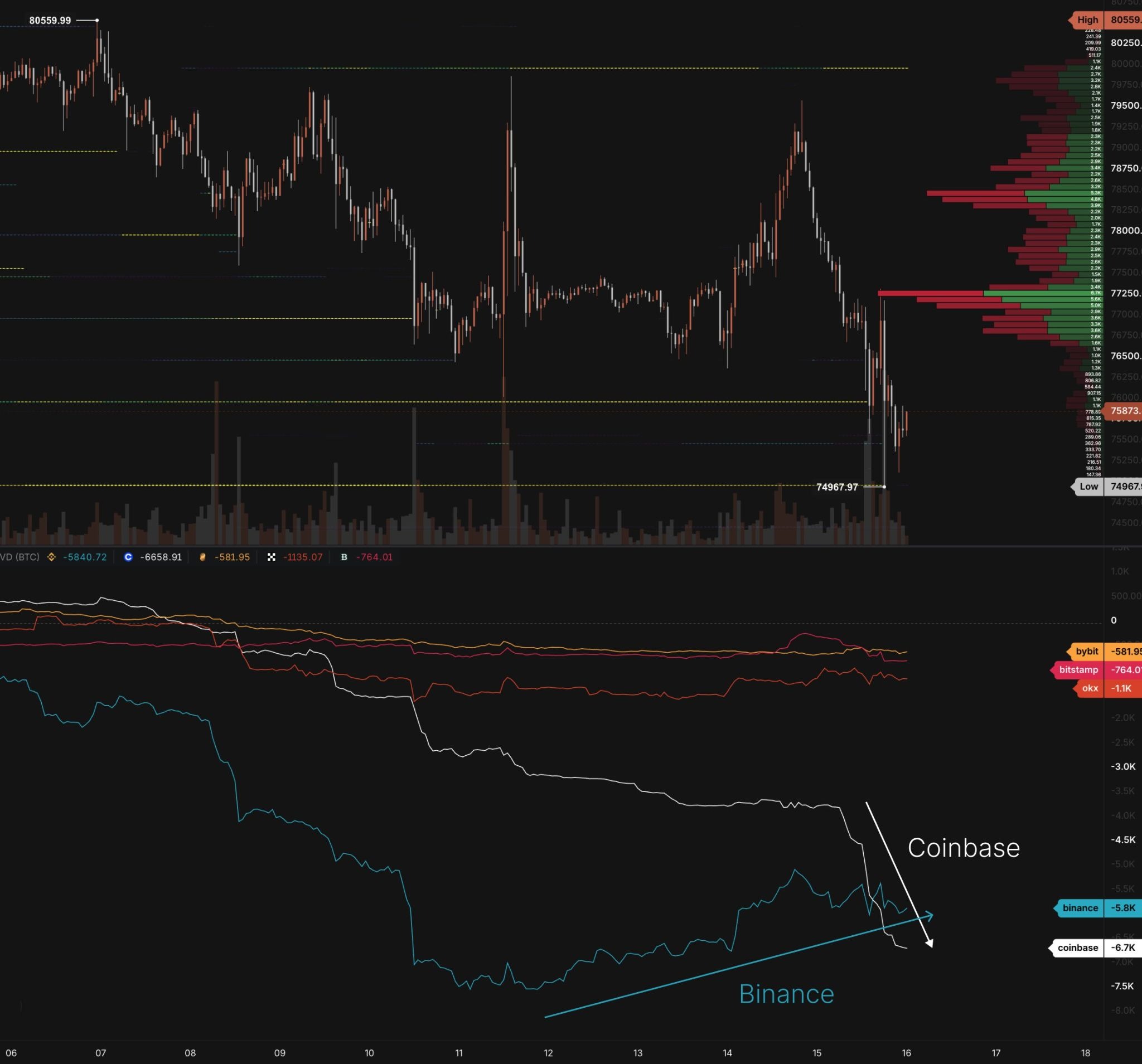
BTC/USD chart with CVD data. Source: Willy Woo on X.com
Short-term holders send BTC to exchanges in unrealized loss
Continuing, CryptoQuant showed that the bulk of reactive selling from the CLARITY failure came from newer Bitcoin investors.
Related: CLARITY Act vote meets Fed rate hike: Five things to know in Bitcoin this week
Short-term holders (STH), wallets holding an unspent transaction output (UTXO) for less than six months, sent up to 34,000 BTC to exchanges on a rolling 24-hour basis. The majority of these coins were transferred to exchanges at a lower price than when they last moved onchain.
“With 23 200 BTC sent to exchanges at a loss, this STH capitulation event is the largest recorded over the past month,” CryptoQuant reported in a blog post.
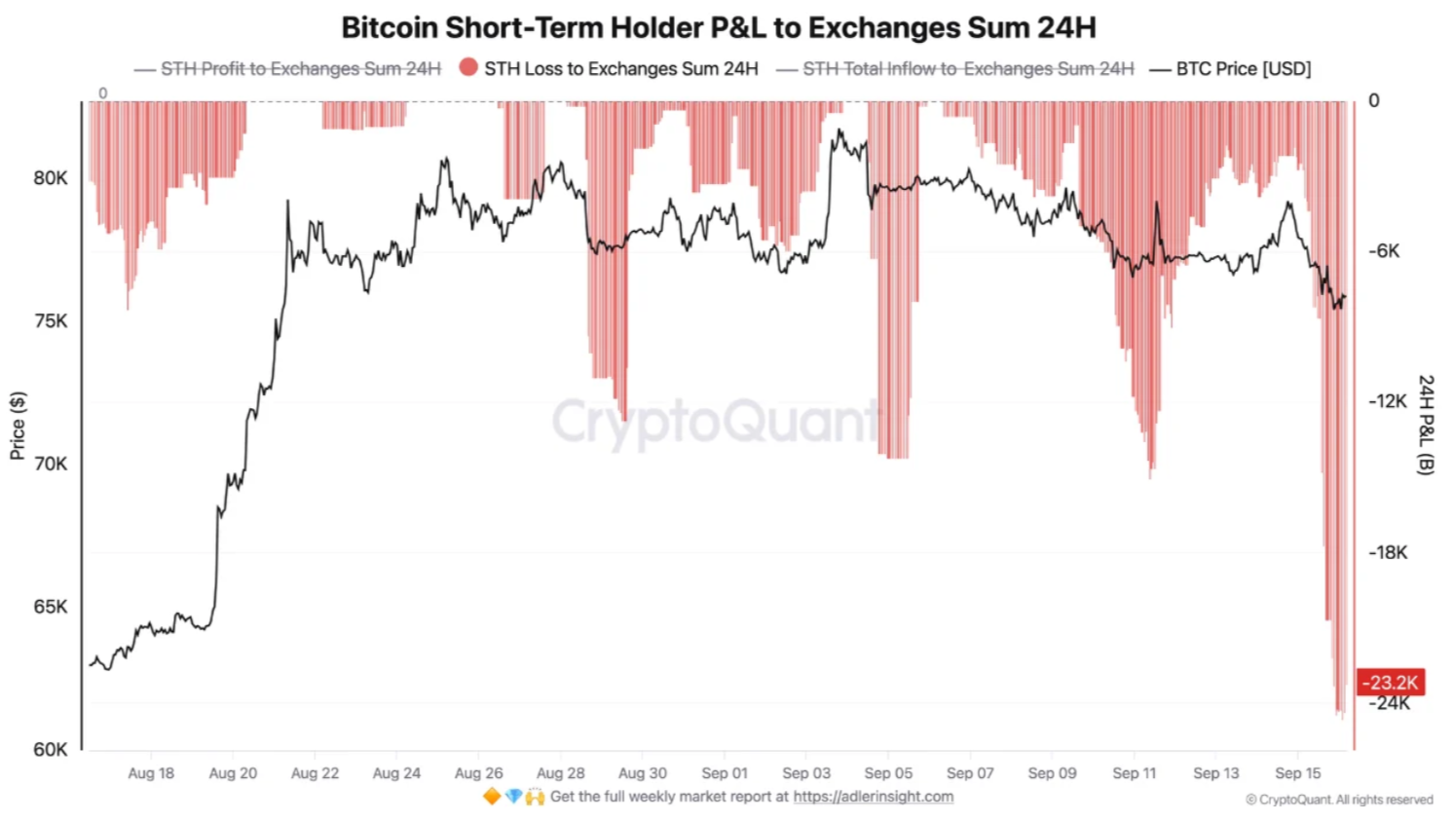
Bitcoin STH cumulative 24-hour profit and loss to exchanges (screenshot). Source: CryptoQuant
Previously, Cointelegraph reported that STH unrealized profitability had reached a key milestone for 2026, potentially boosting the odds of a long-term bullish BTC price trend change.


